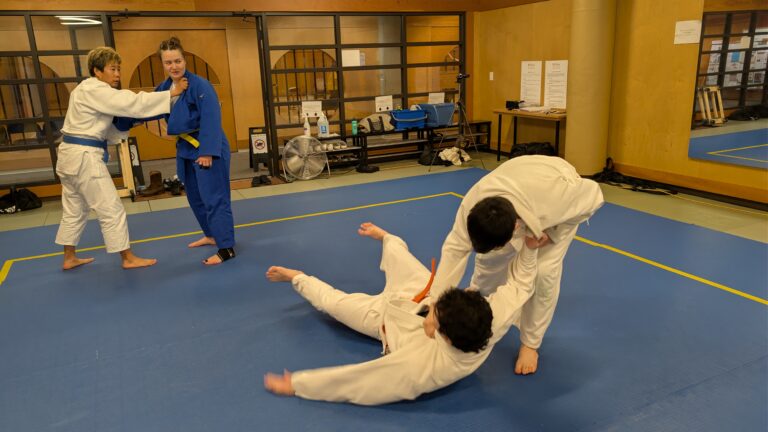
Judo and Japanese-Canadian heritage: training at the Nikkei Centre
Ishikawa Judo Club trains inside the Nikkei National Museum and Cultural Centre in Burnaby, a building dedicated to preserving Japanese Canadian history and culture. That location shapes the club as much as any coach or curriculum.
Ishikawa Judo Club was founded in 1997. From the start, it made its home at the Nikkei Centre on Southoaks Crescent, and it has stayed there ever since. Students walk past exhibits on Japanese Canadian history on their way to the dojo floor.
Judo itself comes from Japan, developed in the 1880s by Jigoro Kano as a way to teach discipline and respect through physical practice, not just self-defence. Students learn to bow before stepping on the mat. They learn to control their strength around a partner instead of overpowering them. They learn that losing a match well matters as much as winning one. These are old ideas, and the club treats them as worth keeping rather than modernizing away.
That approach carries into how the club runs day to day. Coaches expect the same respect and patience from every student, whether they’re six years old in their first FUNdamentals class or an adult who’s been training for years. Judo doesn’t reward showing off. It rewards students who keep showing up and keep working on the same throw until it’s clean.
Ishikawa runs three programs out of the Nikkei Centre: FUNdamentals Judo for ages 6 to 10, Junior Judo for ages 8 to 13, and Technical Judo for ages 14 and up. Classes run Wednesday, Friday, and Sunday. Younger students spend their early classes on coordination, balance, and safe falling before moving into throws and groundwork, while older students and adults in Technical Judo work more directly on technique and grading through the kyu and dan ranks. The structure is the same one judo clubs anywhere use. What sets the classes apart is where they happen.
The Nikkei Centre tells the story of Japanese Canadians, including the internment and dispossession many families endured during the Second World War, and the community’s rebuilding since. Training judo in that building carries real weight for Japanese-Canadian families in Burnaby, and it draws Japanese exchange students and visiting judoka looking for a genuine tie to Japan while they’re here.
A traditional approach to judo pairs naturally with a building built to hold onto tradition. That’s not a coincidence so much as a description of where the club happens to sit.
Families curious about visiting the Nikkei Centre alongside a trial class, or wanting to know about current program openings, can find details at ishikawajudoclub.ca/programs/. The club also welcomes questions directly through its contact page for anyone considering a first visit.